Podcast: Play in new window | Download
Subscribe: Apple Podcasts | Spotify | Android | Pandora | iHeartRadio | TuneIn | Deezer | RSS
Perfectionism is not a personality trait—it is fear with good PR. In Part 2, branding expert Howie Chan reveals the Spotlight Effect, identity-based action psychology, and the Influence Flywheel that transforms sporadic effort into compounding career momentum. For women leaders who want to overcome perfectionism and build a leadership brand that works around the clock, this episode delivers both the neuroscience and the playbook.
>> Perfectionism is fear in disguise—fear of judgment, embarrassment, and failure. Naming it is the first step to dissolving it.
>>The Spotlight Effect (Cornell research): people predict 50% of others notice their mistakes. The real figure is closer to 23%.
>>Identity precedes action: every step you take is a vote for the person you say you are. Change the identity first, and the behaviors follow.
>>The Fresh Start Effect: a setback or layoff is scientifically a powerful moment to build something new—starting from experience, not from scratch.
>>The Influence Flywheel moves you Seen ? Remembered ? Trusted ? Chosen ? Referred — and back again, compounding with every revolution.
I’m Sabrina Braham, MA, MFT, PCC—psychotherapist and executive leadership coach with over 30 years of experience, and host of the Women’s Leadership Success Podcast, ranked in the top 1.5% globally with more than 950,000 downloads. In the second part of my conversation with Howie Chan, we went deep on the most important question in leadership development: if you know what to do to overcome perfectionism and build your leadership brand, why don’t you do it?
Howie’s answer is direct: “We all have the information. Through AI, Google, any search—there is an abundance of it. But then why do we not do the things we know we should?”
The answer is psychology. Specifically: fear, identity, and the story you are telling yourself about who you are and what you are capable of showing the world. This is precisely why so many talented leaders—despite knowing exactly what they should do—never quite get started with executive personal branding.
In 2026, executive branding has shifted from self-promotion to stewardship and thought leadership. The leaders breaking through are not necessarily the most talented—they are the most willing to act. This part of the conversation gives you the psychological framework to actually do that.
Perfectionism Is Not a Virtue. It Is Fear with Good PR.
When Howie asked himself why he kept delaying a launch—“give it another round, don’t release it yet”—he arrived at a clarifying answer.
“It’s fear. Fear that I’ll fail. Fear that I’ll embarrass myself. Fear that other people will judge me. And because of that fear, people procrastinate and hold things back, and say, ‘Oh, I’m a perfectionist—that’s why.’ It’s not really that. If you really think about it—it’s fear.” — Howie Chan
For high-achievers, perfectionism is especially insidious because it masquerades as conscientiousness and high standards—real strengths that have driven real results. But when those strengths become the reason you do not publish the post, do not pitch the promotion, or do not take the visible leadership step—they become obstacles to the career they helped build.
The neuroscience is clear: when the social brain anticipates judgment, it activates the same threat-response pathways as physical danger. Your nervous system treats visibility as a risk. That is not weakness—it is the brain doing exactly what it evolved to do. But in a 2026 executive context where boards explicitly evaluate digital presence and thought leadership, allowing that fear to keep you invisible has a measurable career cost.
The Spotlight Effect: Nobody Is Watching as Closely as You Think

The most liberating research Howie shared in our entire conversation: the Spotlight Effect.
In a landmark study at Cornell University, participants were asked to wear an embarrassing shirt. They predicted approximately 50% of people around them would notice. The actual number: roughly 23%.
“We all go around in our own realities, caring about ourselves more than anyone else. Think about a group photo—who is the first person you look for? Yourself. Always.” — Howie Chan
For any leader building an executive personal brand: the cost of imperfect visibility is almost always dramatically lower than it feels. People are not cataloguing your professional missteps. They are focused on their own challenges, their own careers, their own stories.
Identify one thing you have been withholding because it is “not ready.” Ask yourself: if it were 70% as polished as I want it to be, would it still provide genuine value to someone? If yes, publish it today. The Spotlight Effect guarantees fewer people will scrutinize it than your fear predicts.
Identity-Based Action: Why Waiting to Feel Confident Is Backwards
One of the most counterintuitive insights in our conversation directly contradicts how most leaders think about motivation.
Most people believe: Feel confident ? Take action ? Build identity.
Behavioral psychology says: Decide your identity ? Take the action ? The feeling follows.
“Each action is a vote for the person you say you are. If you think of yourself as a cyclist but you don’t ride—that cognitive dissonance is real pain. So you take the action first, even when you don’t feel like it. And after you do it, you feel phenomenal. Every. Single. Time.” — Howie Chan
Howie trains for a 100-mile bike ride every year. Some mornings he does not feel like training. He goes anyway. The feeling comes after.
For the leader reading this: you do not need to feel like a VP to start acting like one. You do not need to feel confident before posting. You do not need to feel ready before raising your hand for the stretch assignment. Take the action. The identity—and the Confidence, Credibility, and Composure that define the 7 C’s of executive presence—compounds from there.
Real Case Study: From Stuck Alone to Breaking Through in a Group
Howie shared a client story that illustrates this perfectly. Jill (name changed) worked with him one-on-one. They did the deep work: positioning, audience definition, unique value articulation. All the strategy. Nothing moved.
Months later, she joined one of his group cohort programs. Being with others doing the same work—testing positioning, giving and receiving feedback, watching each other execute—changed everything.
“It’s not that the information was so different. It’s because there was a group of people giving her feedback. She was engaged. She saw others executing. And it helped her take accountability and actually move forward.” — Howie Chan
The research on group accountability is consistent: public commitment combined with supportive community dramatically increases follow-through rates. Knowing the science does not make you immune to the psychology—but it makes you smarter about designing your environment to support action.
The Fresh Start Effect: Turning Setback Into Launchpad
What do you do when the worst happens—layoff, passed over, failed project?
Howie referenced behavioral researcher Katy Milkman’s Fresh Start Effect: when we leverage the psychological weight of an ending and a new beginning, we are measurably more likely to follow through on change. This is the science behind New Year’s resolutions, behind why a job change feels like a reset, behind why even walking into a new physical space can shift your mental state.
“That layoff—that death of an identity—is a fresh start. Recalculate. Recalibrate. Think about what you really value. And know this: you are not starting from scratch. You are starting from experience.” — Howie Chan
Every skill, every relationship, every hard-won insight you have accumulated is already yours. A career transition does not erase that—it frees it to be applied somewhere more aligned with what you actually want to build.
The Fresh Start Protocol: 5 Steps for Leaders in Transition
- Step 1Give yourself permission to grieve. Loss of professional identity is a real, physical pain—not a weakness.
- Step 2Step fully away for a defined period before strategizing. Let the shock settle.
- Step 3Inventory your actual skills, insights, and relationships—not your job titles.
- Step 4Ask: what did I want to do that my previous role did not allow? This is your fresh start signal.
- Step 5Begin building visible presence around the intersection of your expertise and that answer—one post, one conversation, one connection at a time.
The Influence Flywheel: From Sporadic Effort to Compounding Momentum
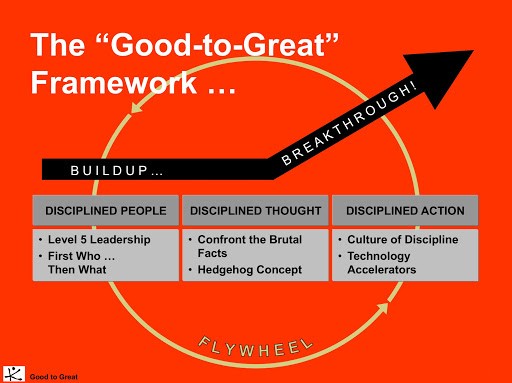
In the final section of our conversation, Howie introduced the framework that reframes how most professionals think about visibility: the Influence Flywheel, inspired by Jim Collins’ Flywheel Effect from Good to Great.
Most professionals operate on the hand pump model: every post written, every event attended, every connection made produces a result—and then resets to zero. One input, one output, repeat from scratch.
The flywheel is fundamentally different. It is a crank that builds momentum. Early revolutions are difficult. But as the wheel gains speed, you get more output from the same input—and eventually it generates inbound opportunities, referrals, and recognition that you did not have to chase.
| Stage | Name | What This Looks Like in Practice |
|---|---|---|
| Stage 1 | Seen | You show up consistently—LinkedIn, speaking, networking—in your specific domain |
| Stage 2 | Remembered | Your name becomes associated with a specific problem, expertise, or point of view |
| Stage 3 | Trusted | C.A.R.E. (Competence, Authenticity, Reliability, Empathy) is demonstrated over time |
| Stage 4 | Chosen | You are selected for roles, projects, boards, and opportunities without applying |
| Stage 5 | Referred | People stake their own reputation to recommend you—the highest trust signal |
| ? Returns to | Seen | Referrals expand your reach; the wheel accelerates with less effort over time |
The flywheel applies internally too. Going for a promotion? Ask: Where do you want to be seen inside the organization? Who needs to see you? How do you get them to remember you? How do you get them to trust you? How do you get them to talk about you when you’re not in the room? Those questions are the internal flywheel. Answer them with intentional, consistent action—and promotion decisions become almost inevitable.
Get this Free Leadership Playbook Today
Get this Free Leadership Playbook Today
What Leaders Misunderstand About Influence
Howie closed our conversation with a clarification every leader needs to hear: influence is not manipulation.
“People often think influence is an underhanded way to get people to do things they don’t want to do. Like any tool, it can be used for good or bad. I am always a proponent of good—because brand is about a long-term relationship.” — Howie Chan
He referenced Dr. Robert Cialdini—the leading researcher on influence science—who documented that people always remember when they have been manipulated, even when they cannot name the specific tactic used. Manipulation destroys brand. Authentic influence builds it.
The most powerful influence a leader can have: use truth to help people make the best decisions for themselves, not for you. That is what great executive presence looks like. That is what great executive personal branding looks like.
People Also Ask: Perfectionism, Identity & the Influence Flywheel
High-performers face what researchers call the Dunning-Kruger inverse: the more genuine expertise you have, the more you tend to undervalue it, and the more you fear that sharing it will expose you to judgment. Combined with the social brain’s threat response to visibility, this creates a specific form of perfectionism rooted in expertise—not inadequacy. The solution is naming the fear, not suppressing it.
The Spotlight Effect is the cognitive bias where we overestimate how much others notice our mistakes. Cornell research found people predicted 50% would notice an embarrassing detail; the actual figure was about 23%. For executive brand-building, this means the professional risk of imperfect visibility is far lower than it feels, while the cost of sustained invisibility is real and measurable.
Rather than waiting to feel confident before acting, you define the leadership identity you are building—thought leader, VP, industry expert—and take small, consistent actions that vote for that identity. Each action strengthens both the neural pathways and the external reputation associated with it, creating compounding momentum over time. The confidence follows the action, not the other way around.
The Influence Flywheel is a compounding visibility system: Seen ? Remembered ? Trusted ? Chosen ? Referred ? back to Seen. Unlike one-off networking or sporadic posting, a flywheel is a system where each element feeds the next, building momentum that requires less energy over time. Identify which stage you are currently in and direct your effort toward the next stage.
Katy Milkman’s Fresh Start Effect shows that endings and new beginnings significantly increase our motivation for change. After a setback, take time to grieve the lost identity, then inventory your actual skills and relationships. You are not starting from scratch—you are starting from experience. Begin building visible presence around your expertise and your next chapter, one action at a time.
Old Thinking vs. New: Overcoming Perfectionism to Build Your Brand
| Perfectionism mindset (keeps you invisible) | Growth mindset (builds your leadership brand) |
|---|---|
| Wait until it’s perfect to publish | Publish at 70% ready; iterate from feedback |
| Fear of judgment stops you from sharing | Spotlight Effect: others notice ~50% less than you think |
| Confidence comes before action | Action precedes confidence (identity-based psychology) |
| One-time networking events | A flywheel system that compounds over time |
| Setback = failure | Fresh Start Effect: setback = best moment to reinvent |
| Solo effort + willpower | Group accountability doubles follow-through rates |
| Influence = manipulation | Influence = using truth to help others make better decisions |
| Information is the barrier | Psychology—not information—is the real barrier |
What’s New: The Psychology of Executive Visibility in 2026
Implement This Week: Launch Before You Are Ready
- 10 minName the one thing you have been withholding due to perfectionism. Write down the actual fear underneath it.
- 15 minApply the Spotlight Effect. Who is actually watching? What is the realistic worst case if this is imperfect?
- 5 minWrite your identity statement: “I am a leader who [value I provide] for [people I serve].”
- 20 minTake one visible action toward that identity today—a post, a message, a comment in an industry conversation.
- OngoingMap your current Influence Flywheel stage. Direct this week’s effort toward the next stage, not all five at once.
Common Mistakes Leaders Make With Perfectionism and Brand-Building
- Treating “not ready” as a fact, not a feeling. Readiness is not a threshold you reach—it is a decision you make.
- Waiting for external validation to start. The promotion, the title, the speaking invitation—none of these arrive before the brand. The brand must come first.
- Skipping the psychology and going straight to tactics. Information is not the barrier. Strategy without internal alignment does not stick.
- Operating on the hand pump model indefinitely. Without a flywheel system, you are always starting from zero. Build the system.
- Trying to do it alone. Accountability, feedback, and witness are not nice-to-haves—they are what actually moves the needle.
Your Leadership Brand Is Your Most Valuable Career Asset — Start Building It Today
Download our FREE Leadership Branding Blueprint Accelerator and get:
- A step-by-step framework to move from invisible to indispensable—inside and outside your company
- The 5-stage Influence Flywheel mapped to your specific leadership goals
- Scripts to articulate your executive value without feeling like you are bragging
- The Fresh Start roadmap for leaders navigating layoffs, transitions, or stalled careers
- Techniques used by 250+ leaders—many achieving promotions 3× faster than average
About the Experts
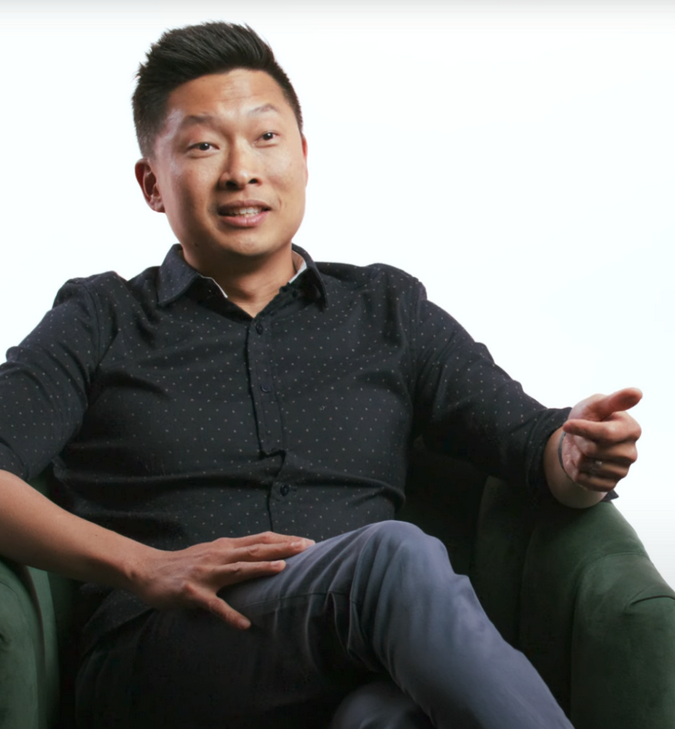
Howie Chan is a professional brand strategist specializing in executive visibility and the science of influence. After being laid off as managing director of brand strategy in 2022, he built one of LinkedIn’s most recognized voices on professional branding from scratch in under four years. He hosts the Influence Anyone podcast, publishes a weekly Influence Playbook newsletter, and leads the Influence System Mastery cohort program. HowieChan.com

Sabrina Braham is an executive leadership coach with over 30 years of experience and host of the Women’s Leadership Success Podcast—top 1.5% globally with 950,000+ downloads since 2007. She has guided 250+ senior leaders across tech, finance, and professional services to advance faster and build careers that reflect their full potential. womensleadershipsuccess.com